Case study
1st MR LINAC in the GCC region stands as a benchmark in the delivery of complex healthcare infrastructure
PROJECT OUTCOME
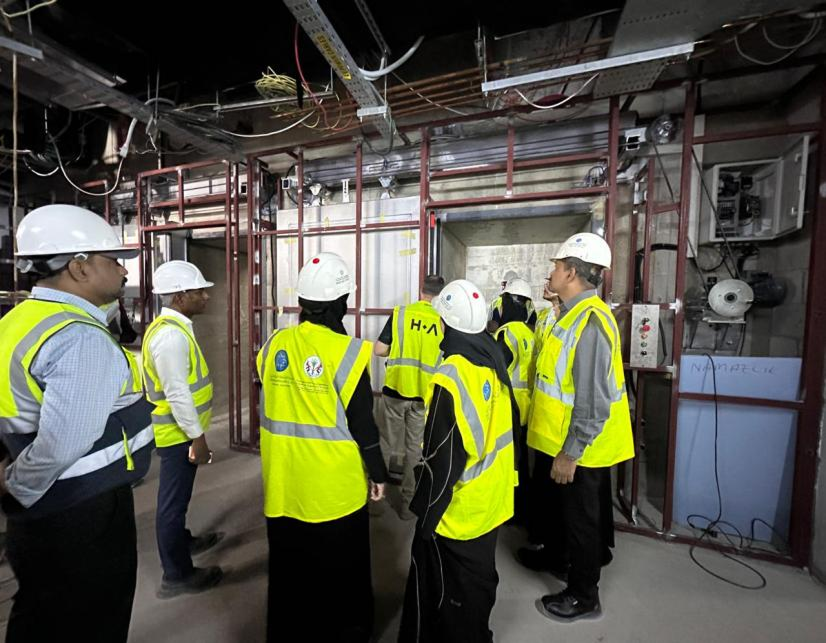
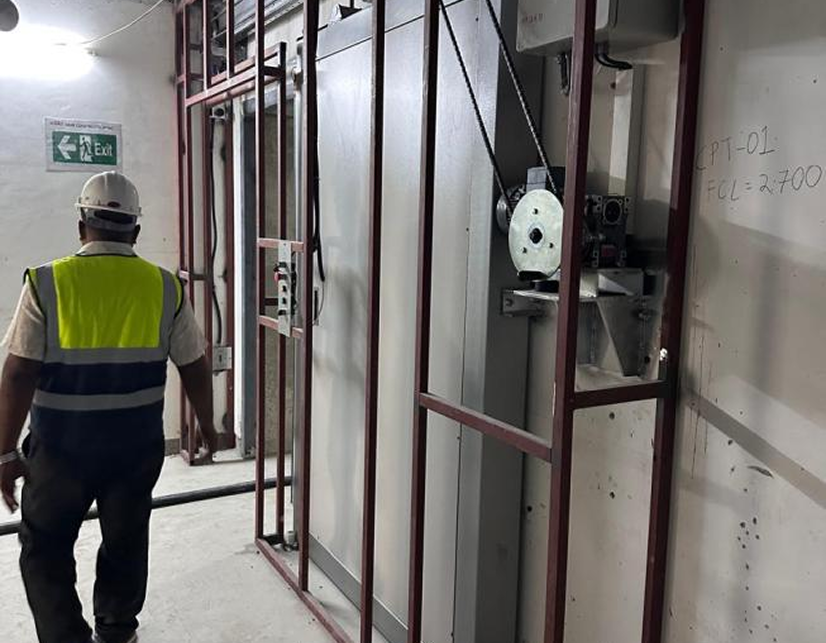
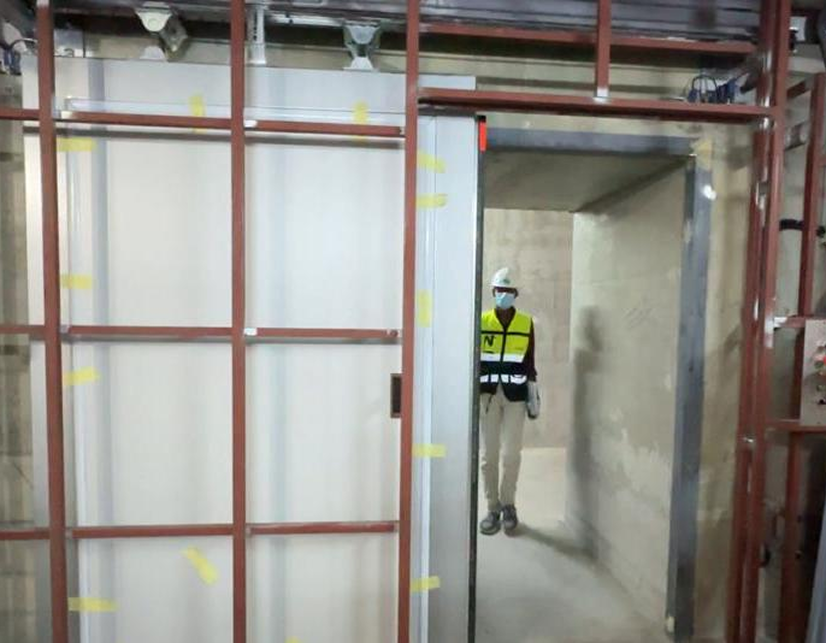
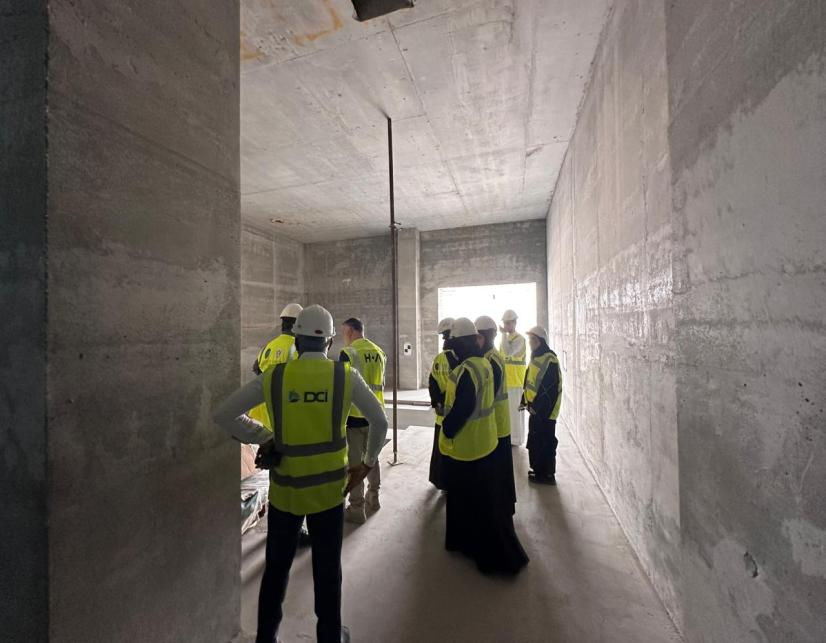
Linac Bunkers For The Mr Linac , Standard Linac & Brachytherapy
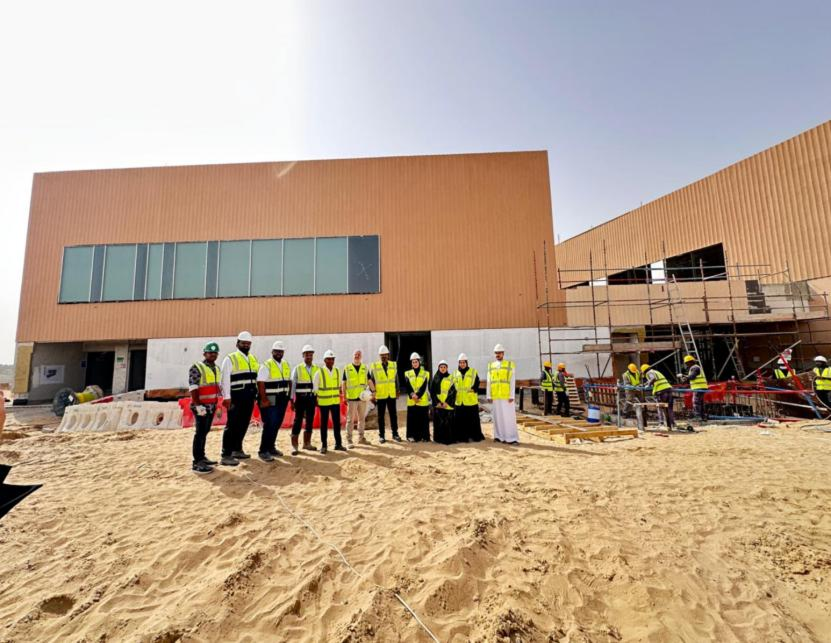
- Exceptional radiation containment
- Magnetic - field stability suitable for MR- guided radiotherapy
- Structural robustness for long - term operational reliability
- Precise integration with advanced medical equipment
- A safe, compliant, and future -ready treatment environment
This project is a 1
st MR LINAC in the GCC region stands as a benchmark in the delivery of complex
healthcare infrastructure, demonstrating the team’s capability to execute high – precision construction by
DCIB Construction under demanding technical and regulatory conditions as planned within cost and
time parameters . Currently the space is enabled ready for medical equipment’s delivery and installation
APPROACH
Mix design was carefully considered with regards to the Strength of concrete, pouring height , volume and cold joint
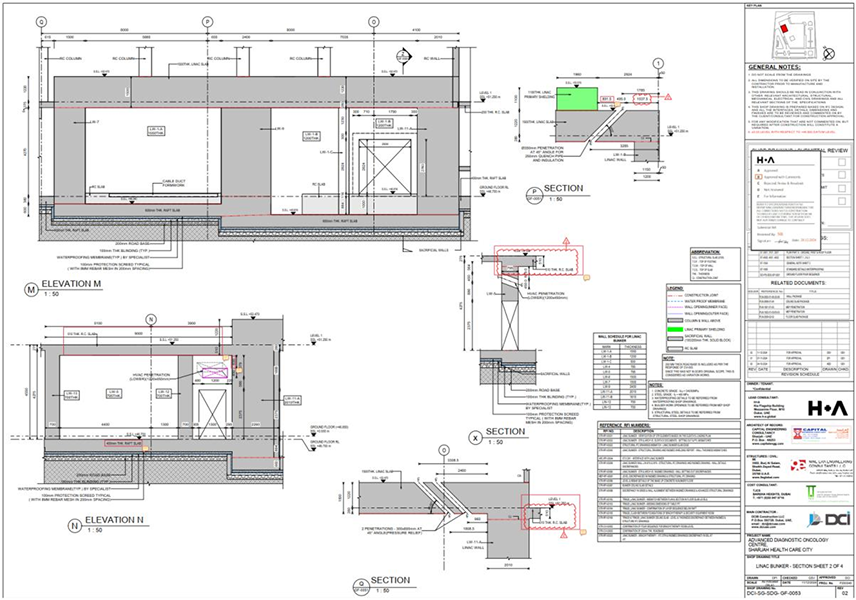
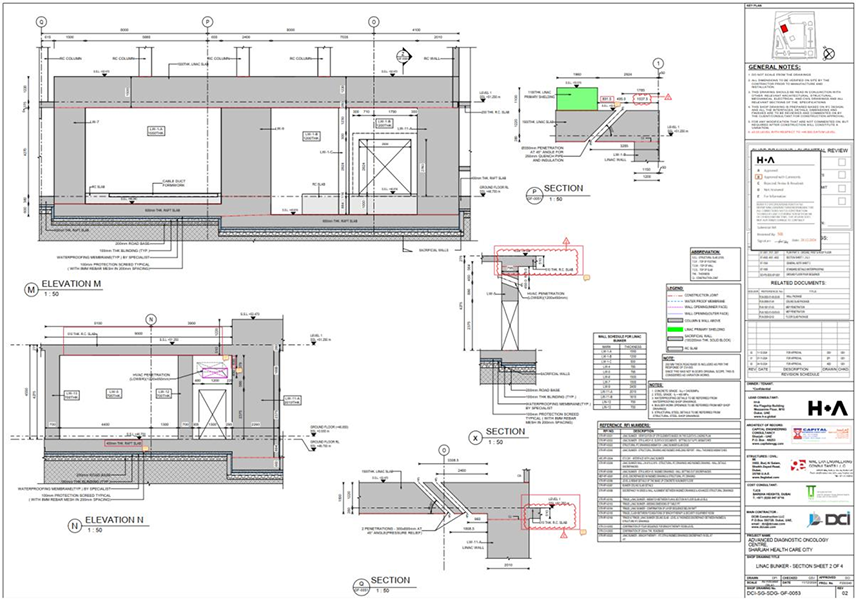
Reinforcement Strategy and Execution – MR Linac & Linac Bunker
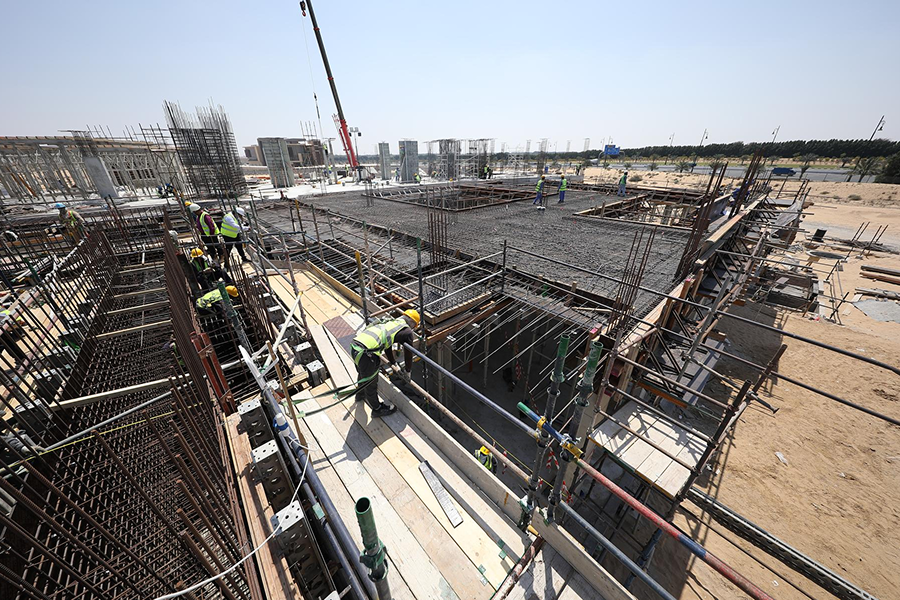
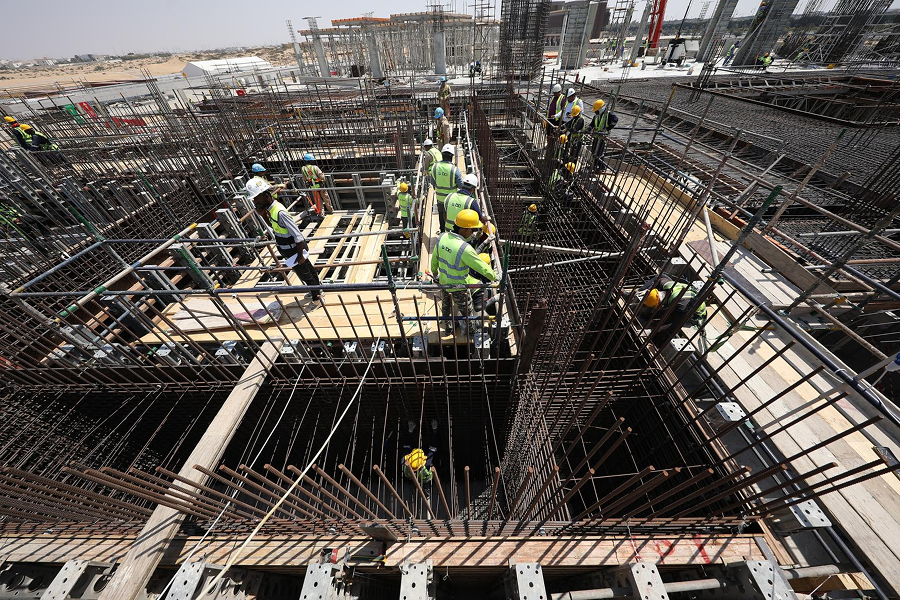
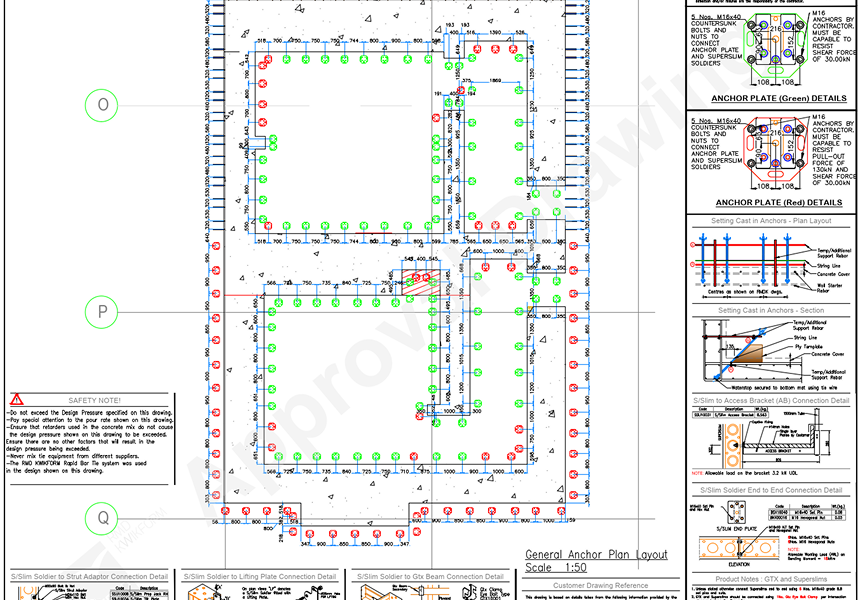
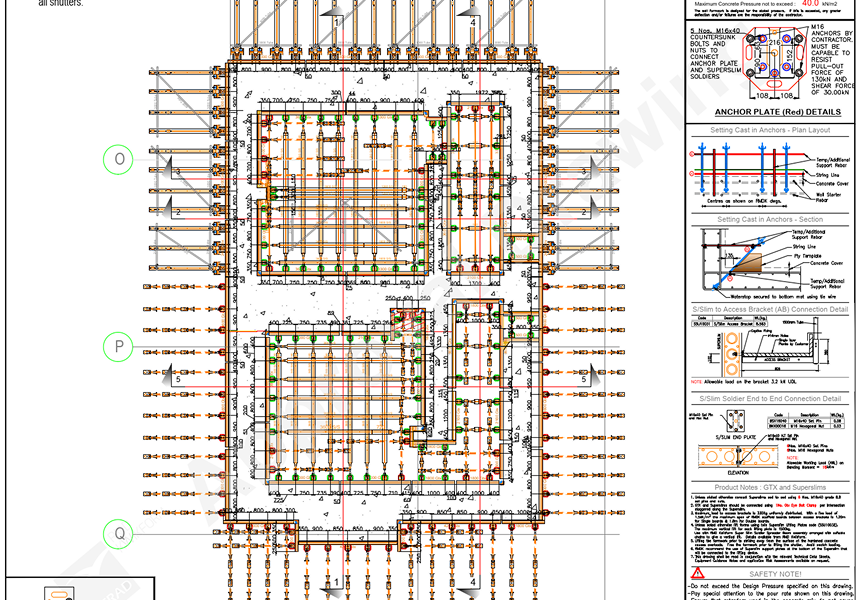
The reinforcement works for the MR Linac and Linac bunkers demanded exceptional accuracy, material control, and
strict adherence to non- ferromagnetic requirements . Across the project, more than 5,200 meters of reinforcement were
installed with carefully engineered anchorage, spacing, and material transitions to support both structural performance
and radiation -shielding integrity .
Reinforcement Quantities
MR Linac Area : . 2,500 m of reinforcement
Linac Area : . 2,400 m of reinforcement
Non- Ferromagnetic Zone:. 370 m of specialty reinforcement
Reinforcement shear hooks in every 100mm
These quantities reflect the density and complexity required to support high – mass shielding concrete and the precision
tolerances of MR- guided radiotherapy equipment.
APPROACH
Bunker Execution Approach
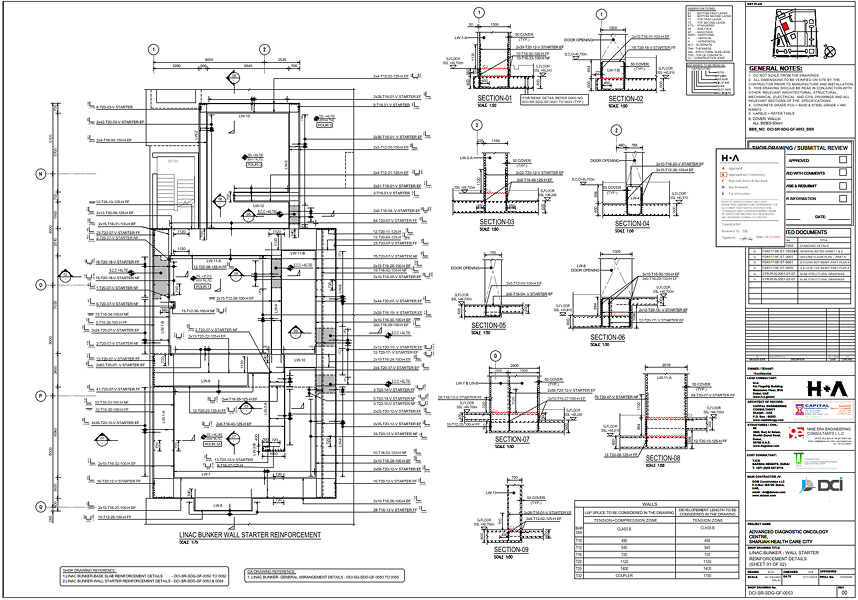
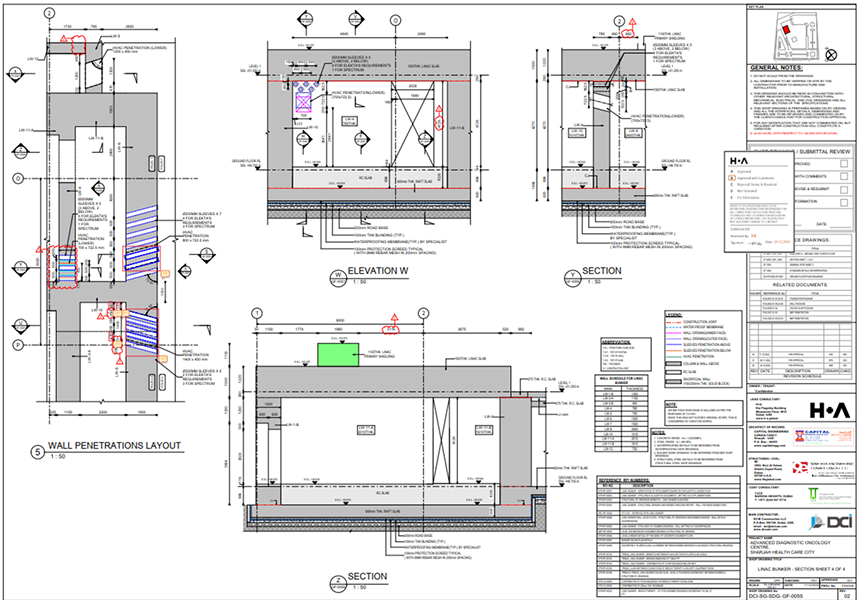
Anchorage to Existing Structures
To ensure monolithic behaviour between the new slab and the existing foundation and wall structures, reinforcement bars were
chemically anchored to a minimum depth of 300 mm.
Anchorage Ratio : 1out of every 4 reinforcement bars was anchored .
This approach provided structural continuity while maintaining the shielding performance required for both MR and radiation
zones .
Non- Ferromagnetic Reinforcement Works
The MR environment required the use of non- ferromagnetic reinforcement, which introduced unique installation challenges
Handling & Fixing
Non- ferromagnetic bars cannot be bent, so all intersections were secured using non- conductive, non- ferrous ties such as
high -strength zip ties.
A 50 mm extension was incorporated into all bar lengths to facilitate tying and ensure proper overlap
METHODOLOGY
Execution Methodology
Construction Execution Narrative – LINAC Bunker Floor Slab
Delivering a LINAC bunker demands absolute precision, uncompromising safety, and flawless coordination . The floor slab works
were executed through a meticulously controlled sequence designed to uphold the project’s structural, operational, and
radiation -shielding integrity .
Pre - Construction Excellence
The team began with a rigorous review of all approved drawings, specifications, and shielding requirements to ensure complete
clarity on slab geometry and performance criteria . A high – level coordination meeting —attended by the Radiation Safety Officer
(RSO), engineering leads, and construction supervisors —established the safety framework, sequencing strategy, and
communication protocols . Only after a final radiation clearance was issued did the team authorize the start of physical works .
Precision Anchoring to Side Walls
To achieve a monolithic structural connection, the team identified exact drilling points along the bunker’s side walls . Holes were
drilled with controlled accuracy, reinforcement bars were inserted, and high -strength chemical anchors were applied . Once
cured, these anchors formed a robust interface capable of supporting the slab’s load and shielding performance, ensuring
long – term stability .
METHODOLOGY
Execution Methodology
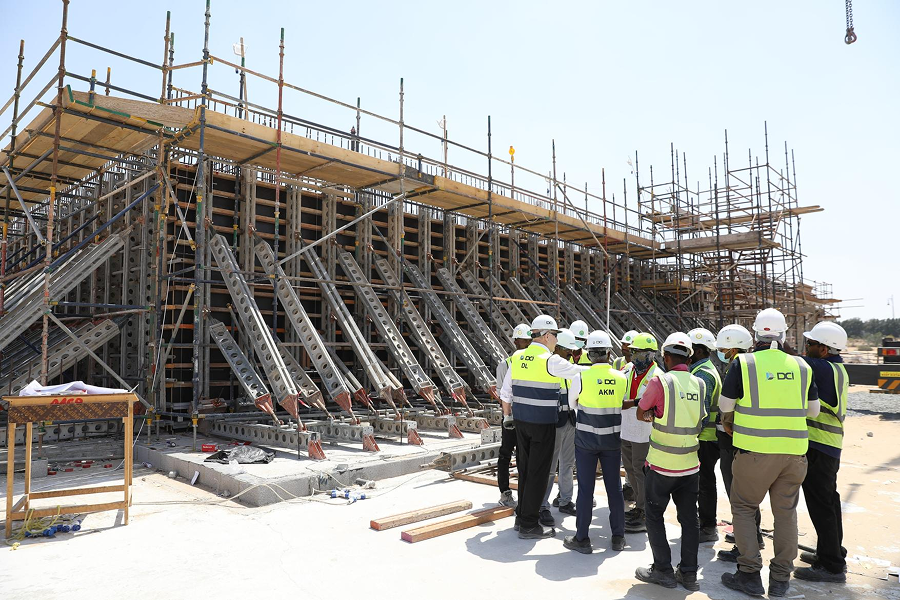
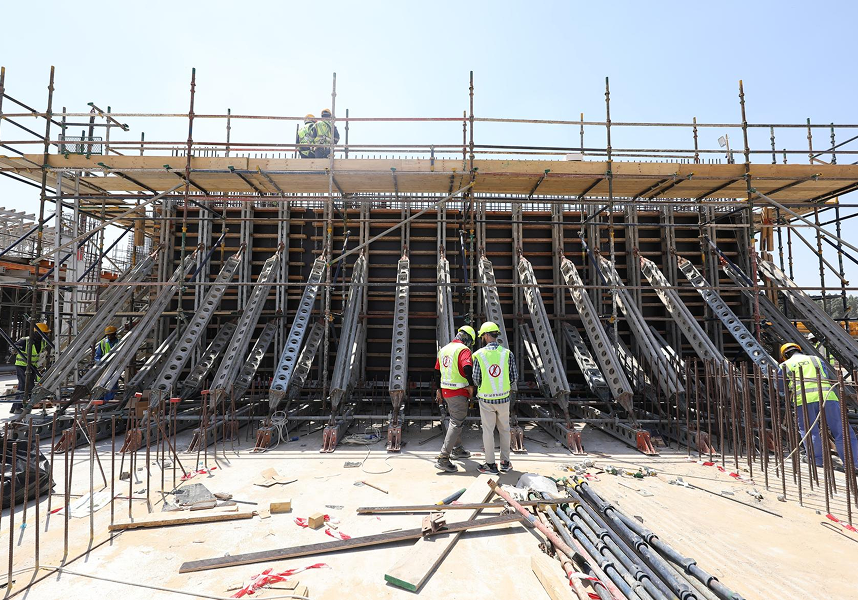
Formwork Installation with Millimetric Control
Adjustable steel formwork was installed to accommodate the precise elevations required for cable trays, embedded conduits, and equipment base plates. The formwork was securely anchored to the raft foundation and wall rebars using expansion anchors or welded connections. Special emphasis was placed on controlling the LINAC isocenter—a critical benchmark for equipment alignment. Final adjustments to prefabricated molds ensured absolute dimensional accuracy.
Reinforcement Works with Structural Discipline
Reinforcement bars were positioned and tied exactly as per the approved structural drawings, with careful attention to spacing, cover, and support. All steel was cleaned and inspected to guarantee optimal bonding. Ano profiles were installed at the finished floor level, establishing a reliable reference for screeding and ensuring the slab would meet stringent flatness and levelness requirements. Shear hooks in concrete slabs are used to improve shear resistance, especially to avoid any punching shear or at wall joints.
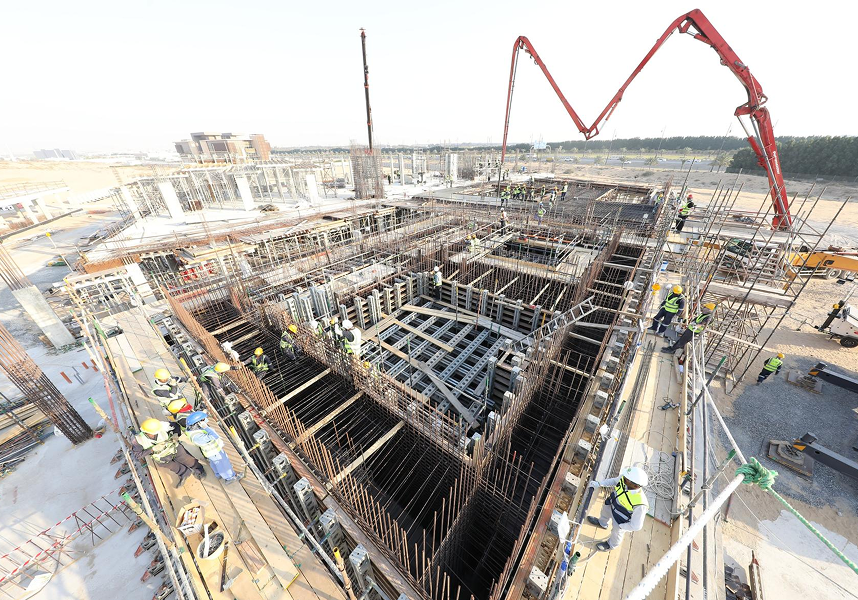
Concrete Placement and High-Quality Finishing
Concrete placement was executed with controlled sequencing to ensure complete compaction around reinforcement sheerhooks and within all corners. Mechanical vibrators eliminated air pockets and ensured uniform consolidation. Laser leveling tools were used throughout the pour to maintain the required thickness and achieve a flawless surface profile. The slab was then screeded to its final level and troweled to produce a smooth, uniform finish—ready to receive subsequent shielding layers and medical-grade finishes.